

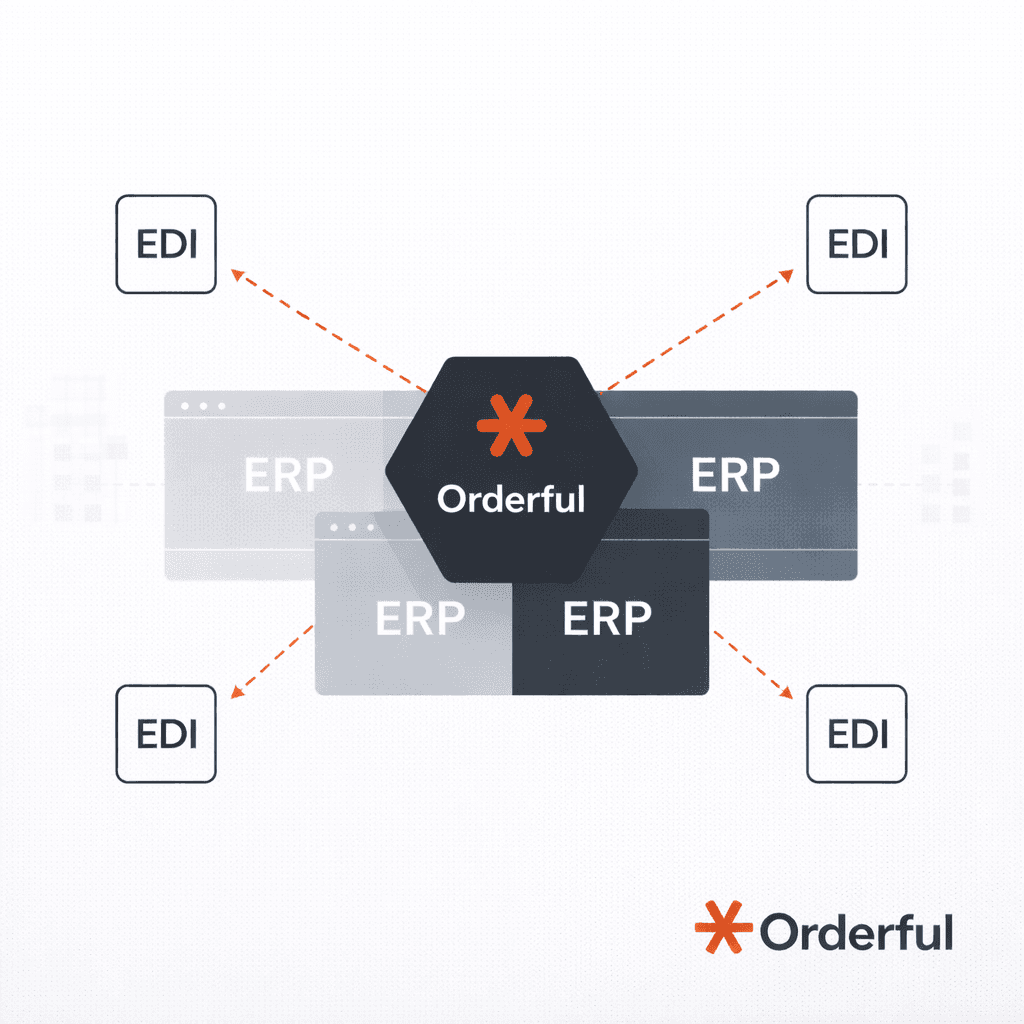
Explore top EDI platforms built for multi-ERP environments. Learn how to evaluate, compare, and choose the EDI system that best fits your organization's needs.
Managing electronic data interchange (EDI) across multiple enterprise resource planning (ERP) systems is one of the more complex challenges in modern supply chain management. Whether it's due to a company acquisition, regional system differences, or division-specific ERP deployments, organizations running multiple ERPs often find that their EDI processes don't scale cleanly across all of them. Duplicated mapping, inconsistent trading partner management, and scattered transaction visibility can quietly erode data accuracy and supply chain visibility.
Understanding modern EDI and how it performs in multi-ERP environments is the first step toward solving these challenges. This article explores the best EDI platforms for multi-ERP environments, what to look for when evaluating them, and how to choose the right fit for your organization.
About Orderful
Orderful's Mosaic provides a single API integration point working across all ERP systems without requiring duplicate configurations, eliminating the need for separate EDI connections per ERP. Centralized partner management onboards trading partners once and applies connections across entire ERP environments, while unified transaction visibility monitors all EDI activity from a single dashboard. Transparent per-trading partner pricing eliminates service bundle surprises as transaction volume grows. The platform supports NetSuite, SAP, Microsoft Dynamics, Acumatica, QuickBooks, and Shopify integrations with standardized onboarding processes reducing errors and cutting implementation time.
Why Multi-ERP Environments Need Specialized EDI Solutions
Running multiple ERPs isn't unusual. Companies grow through acquisitions, expand into new regions, or build out divisions that each operate on their own systems. The biggest challenge is that traditional EDI wasn't designed with that kind of complexity in mind.
When EDI processes aren't centralized, cracks quickly show. Each ERP integration may require its own data mapping configuration, which means your team maintains duplicate or even triplicate mapping setups for the same trading partners. Partner management becomes fragmented, with onboarding processes that vary by system rather than by standard. Transaction visibility gets scattered across platforms, making it harder to implement automated exchange or maintain a clear picture of what's moving through your supply chain.
When evaluating EDI platforms for a multi-ERP environment, there are a few things worth prioritizing. You'll want a single integration point that works across all your ERP solutions, centralized partner management that doesn't require system-by-system configuration, and real-time visibility into all transaction data, regardless of which ERP it originated in.
Best EDI Platforms for Managing Multiple ERP Systems
Orderful
Orderful's Mosaic is a cloud-based, API-driven EDI solution built around a single integration point that works across multiple ERP systems. Rather than separate EDI connections for each ERP, Orderful helps manage all trading partner relationships, EDI document exchange, and onboarding workflows from one centralized platform.
Strengths:
Single API integration point: Works across all ERP systems without requiring duplicate configurations.
Centralized partner management: Onboard trading partners once and apply that connection across your entire ERP environment.
Unified transaction visibility: Monitor all EDI activity across every connected ERP from a single dashboard.
Standardized onboarding: Consistent processes across systems reduce errors and cut implementation time.
Pricing model: Orderful uses a transparent, per-trading partner pricing model, so you pay for what you actually use rather than being locked into a service bundle. Predictable pricing means fewer surprises as your transaction volume grows.
Notable integrations: NetSuite, SAP, Microsoft Dynamics, Acumatica, QuickBooks, Shopify
Best for: Orderful is an especially strong fit for mid-market to enterprise brands managing multiple ERP software integrations, particularly organizations that have grown through acquisition and need to consolidate EDI operations without rebuilding their entire ERP infrastructure.
TrueCommerce
TrueCommerce is a unified commerce platform that connects businesses to trading partners, customers, and suppliers through a network of pre-built ERP integrations. Its connector library spans many ERP systems, making it practical for organizations that want out-of-the-box connectivity.
Strengths:
Pre-built ERP connectors: Ready-made integrations for commonly used ERP platforms reduce setup time and technical overhead.
Real-time data exchange: EDI transactions automatically flow across connected systems, enabling accurate inventory management and reporting.
Pricing model: TrueCommerce offers service bundle tiers, with pricing structured around services and required integrations. Organizations should expect to engage their sales team to obtain a custom quote tailored to their specific ERP environment.
Notable integrations: NetSuite, SAP, Oracle, Microsoft Dynamics 365
Best for: TrueCommerce is a strong fit for wholesale and retail operations with established ERP infrastructure that need reliable, low-maintenance EDI connectivity across their existing systems.
Cleo Integration Cloud
Cleo Integration Cloud is a hybrid platform designed for managing complex, high-volume ecosystems. Its flexible architecture supports both legacy and API-based connections through a single interface, making it adaptable to environments where standard EDI protocols and modern API workflows must coexist.
Strengths:
Flexible architecture: Supports both legacy and modern EDI integrations on a single platform, reducing the need for separate tools.
Customizable dashboards: Visibility into transactions and workflows can be tailored to the specific needs of each ERP environment.
Pricing model: Cleo uses an enterprise licensing model. Pricing is customized based on the scope and complexity of an organization's integration environment.
Notable integrations: SAP, Oracle, TMS connectors, custom ERP systems
Best for: Cleo is well-suited for enterprises running high-volume workflows or international operations that require a platform flexible enough to handle both legacy infrastructure and modern API-based EDI-ERP integrations.
Jitterbit
Jitterbit is an integration platform as a service (iPaaS) that extends into EDI through its data integration capabilities. Low-code tools enable rapid deployment, making it accessible to teams that need to connect EDI workflows with a wider range of systems and business partners.
Strengths:
Low-code deployment: Reduces the technical barrier for integrating EDI with multiple ERP systems and other enterprise tools.
Broad integration scope: Combines EDI with wider data integration capabilities, supporting complex multi-system environments beyond standard EDI use cases.
Pricing model: Jitterbit uses platform-based pricing structured around the scale of your integration environment. Custom quotes are available through their sales team.
Notable integrations: Wide ERP support, including legacy systems
Best for: Jitterbit works best for businesses that need to include an EDI integration into a larger integration strategy rather than a standalone EDI solution.
SPS Commerce
SPS Commerce is a fully managed EDI provider with a large network of retail trading partners. Its pre-built ERP-EDI integrations and managed service model make it a practical choice for organizations that want EDI handled for them rather than managing it in-house.
Strengths:
Pre-built retail integrations: Extensive connections to major retailers and trading partners reduce the time and effort required to get up and running.
Managed service model: SPS Commerce handles EDI operations on your behalf, reducing the burden on internal IT and operations teams.
Pricing model: SPS Commerce uses a managed service fee structure. Pricing varies based on the number of trading partners and transaction volume.
Notable integrations: NetSuite, Microsoft Dynamics 365, QuickBooks, SAP, Shopify
Best for: SPS Commerce is a strong fit for teams with limited technical resources that need to manage retail trading partner relationships without building out internal EDI expertise.
EDI for Multiple ERPs: Key Capabilities Comparison
Not all EDI platforms handle multi-ERP environments the same way. The table below compares each platform's capabilities for managing EDI across multiple systems.
Capability | Orderful | TrueCommerce | Cleo | Jitterbit | SPS Commerce |
|---|---|---|---|---|---|
API-first architecture | ✓ | — | ✓ | ✓ | — |
Self-service model | ✓ | — | ✓ | ✓ | — |
Managed service option | ✓ | ✓ | — | — | ✓ |
Real-time visibility | ✓ | ✓ | ✓ | ✓ | ✓ |
Transparent pricing | ✓ | — | — | — | — |
Developer tools | ✓ | — | ✓ | ✓ | — |
The right platform depends on more than a feature checklist. Understanding how each capability maps to your specific ERP environment and growth plans is what separates a good fit from a costly mismatch.
How to Evaluate EDI Platforms for Multi-ERP Scenarios
Choosing the right EDI solution for a multi-ERP environment means going beyond just features. These core elements will help narrow down your options.
Must-Have Capabilities
Centralized partner management: A single place to onboard, manage, and monitor all trading partners across every connected ERP.
Cross-ERP transaction visibility: Real-time access to EDI data and business document processing regardless of which ERP originated the transaction.
Scalable EDI solution: The platform should grow with your organization without requiring a full reintegration every time you add an ERP.
Questions to Ask During Demos
Data mapping: How does the platform handle data mapping across multiple ERPs with different data structures?
Integration timeline: What's the realistic implementation timeline for connecting two or more ERPs simultaneously?
EDI standards support: Does the platform support the EDI standards I require, and how does it handle trading partners that require different formats?
Red Flags to Watch For
Manual data entry requirements: Any platform that relies on manual keying for cross-ERP transactions is a step backward, not forward.
Pricing transparency: If a vendor won't give you a clear picture of costs upfront, integration challenges down the road may come with surprise fees attached.
Limited ERP connectors: A platform with a short list of supported ERPs may leave you building custom integrations for every new system you add.
Find the Right EDI Integration for Your Multi-ERP Environment
The best EDI platform for your organization depends on where you are today and where you're headed. If you're managing multiple ERPs after an acquisition or planning for growth, you need a centralized EDI solution that scales with your business rather than one that requires rebuilding every time your ERP environment changes.
Orderful's API-driven platform gives organizations a single point of contact for all their ERP systems, with transparent pricing and improved visibility across every trading partner connection for more accurate transaction processing. Contact an EDI expert or schedule a demo today to see how Orderful can help you simplify your EDI and ERP integration strategy.
FAQs
Why do multi-ERP environments need specialized EDI solutions?
Multi-ERP environments create complexity because traditional EDI wasn't designed for it. Each ERP integration requires its own data mapping configuration, forcing teams to maintain duplicate or triplicate mapping setups for the same trading partners. Partner management becomes fragmented with onboarding processes varying by system rather than standard. Transaction visibility scatters across platforms making it harder to implement automated exchange or maintain clear supply chain visibility. Specialized solutions provide single integration points working across all ERPs, centralized partner management, and real-time visibility into all transaction data.
What should I look for in EDI platforms for multiple ERPs?
Look for a single API integration point working across all ERP systems without duplicate configurations, centralized partner management onboarding trading partners once and applying connections across entire environments, and unified transaction visibility monitoring all EDI activity from single dashboards regardless of originating ERP. Evaluate scalable solutions growing with organizations without requiring full reintegration when adding ERPs. Confirm support for required EDI standards and ask about data mapping approaches across ERPs with different data structures, realistic implementation timelines, and pricing transparency.
How does Orderful compare to other multi-ERP EDI platforms?
Orderful's Mosaic uses single API integration eliminating duplicate configurations versus platforms requiring separate connections per ERP. Centralized partner management onboards once across all systems compared to TrueCommerce and SPS Commerce requiring system-by-system configuration. API-first architecture matches Cleo and Jitterbit but Orderful combines it with transparent per-partner pricing versus enterprise licensing models. Self-service model with developer tools provides control compared to fully managed services. Real-time visibility and standardized onboarding reduce errors and implementation time across NetSuite, SAP, Dynamics, Acumatica, QuickBooks, and Shopify.
What are red flags when evaluating multi-ERP EDI platforms?
Red flags include manual data entry requirements where platforms rely on manual keying for cross-ERP transactions representing backward steps. Pricing transparency issues where vendors won't provide clear upfront costs suggest integration challenges may come with surprise fees. Limited ERP connectors with short supported system lists require building custom integrations for every new system added. Additional warnings include platforms requiring full reintegration when adding ERPs, fragmented partner management varying by system, and lack of unified transaction visibility across connected ERPs.
What questions should I ask during EDI platform demos?
Ask how platforms handle data mapping across multiple ERPs with different data structures, confirming whether solutions require duplicate configurations or centralize mapping logic. Question realistic implementation timelines for connecting two or more ERPs simultaneously, not just single system integrations. Verify EDI standards support and how platforms handle trading partners requiring different formats. Inquire about pricing transparency, scalability when adding ERPs, cross-ERP transaction visibility approaches, and whether solutions offer self-service models or require managed services.
- 01About Orderful
- 02Why Multi-ERP Environments Need Specialized EDI Solutions
- 03Best EDI Platforms for Managing Multiple ERP Systems
- 04EDI for Multiple ERPs: Key Capabilities Comparison
- 05How to Evaluate EDI Platforms for Multi-ERP Scenarios
- 06Find the Right EDI Integration for Your Multi-ERP Environment
- 07 FAQs
