


Cut EDI onboarding to days, not months, and stay compliant. See how Orderful validates X12/EDIFACT, tracks 997s, and secures AS2, SFTP, and OFTP2 transport.
Traditional EDI partner onboarding takes 8 to 12 weeks because most of that time goes into manual mapping, one-off testing cycles, and email threads with a partner's IT team, not because compliance itself is slow. Modern platforms cut that to single-digit days by automating ASC X12 and EDIFACT validation, partner-specific mapping, and compliance checks before a transaction ever reaches the trading partner. Orderful customers go live with new trading partners in an average of 9 days, on flat-rate pricing, without skipping the 997 acknowledgments, audit trails, and secure transport setup that legacy onboarding processes often push to "later."
This guide is for supply chain managers, IT leads, and ops teams evaluating why their EDI onboarding queue is stuck and what a faster process actually requires. Speed and compliance aren't a trade-off. A process that skips validation to move faster just moves the delay downstream, into chargebacks and failed audits.
Why Does Traditional EDI Onboarding Take So Long?
Most onboarding delay comes from manual mapping and disconnected tools, not from the trading partner's actual requirements. A typical mid-market team runs a separate translator, mapping tool, VAN connection, and monitoring dashboard, and none of them talk to each other.
Legacy Tools and Fragmented Systems Each new trading partner means reconfiguring a translator, re-establishing a VAN connection, and manually cross-checking versions across systems that were never built to share a partner's guideline data.
Manual Mapping and Testing Someone has to hand-build a map from a partner's implementation guide for every transaction set, an 850 purchase order, an 856 ship notice, an 810 invoice, then test it over shared windows that only open a few times a week.
Communication Bottlenecks Spec changes get buried in email threads. Nobody has a single source of truth for which guideline version is live, so testing restarts every time a partner tweaks a requirement.
How Do You Onboard Trading Partners Faster Without Losing Control?
You remove the manual work, not the compliance work, by starting from a partner library that already has the mapping and validation rules built in rather than rebuilding them from scratch.
Start From Pre-Built Trading Partner Guidelines Instead of transcribing a retailer's implementation guide into a mapping tool by hand, start from a guideline set that already codifies that partner's segments, qualifiers, and code lists. Orderful maintains a network of pre-connected trading partners with guidelines already published, which is a large part of why average onboarding time runs around 9 days instead of 9 weeks.
Run Self-Service Testing Instead of Waiting on a Shared Window Self-service testing environments let your team send and validate test transactions on their own schedule instead of booking time in a partner's shared test window, which is often the single biggest scheduling bottleneck in a legacy process.
Automate Acknowledgment and Monitoring From Day One Every test and production transaction should generate its 997 automatically and log to a monitoring dashboard, not sit in an inbox waiting for someone to confirm receipt manually.
How Do You Ensure Compliance When Exchanging EDI Documents With Trading Partners?
Compliance means four things happen on every transaction: it's validated against the correct standard before it leaves your system, its receipt is confirmed with a 997 functional acknowledgment, every step is logged in an audit trail, and it travels over an encrypted transport protocol like AS2, SFTP, or OFTP2. Skip any one of these and you have a working integration that won't survive a partner audit or a chargeback dispute.
X12 and EDIFACT Validation Standards
ASC X12 is the transaction standard used across North American retail, transportation, and healthcare EDI, covering documents like the 850 purchase order, 810 invoice, and 856 ship notice. UN/EDIFACT is the international equivalent, used across European and global supply chains for the same functional documents under different segment structures.
Validation happens in layers: syntax validation checks that segments and elements are structured correctly, and semantic validation checks the data against the specific trading partner's guideline, not just the base standard. A transaction can be perfectly valid X12 and still fail a specific retailer's guideline if a required qualifier or code value is missing. Orderful validates every transaction against the partner's published guideline set at the API layer before it transmits, so mapping errors surface during testing instead of after go-live.
What a 997 Functional Acknowledgment Confirms (and What It Doesn't)
A 997 functional acknowledgment confirms that an interchange was received and passed syntax validation. It does not confirm business acceptance of the document's content; that's a separate step, often a 855 purchase order acknowledgment or a manual review.
Most retail EDI programs require partners to return a 997 within a set window, commonly 2 to 4 hours, and missing that window is a common source of compliance flags and chargebacks. Orderful auto-generates 997s for inbound transactions and gives you visibility into which acknowledgments are outstanding, so a missed window shows up as an alert instead of a surprise.
What Belongs in an EDI Audit Trail
An audit trail for EDI needs to capture, at minimum:
- Transaction ID, timestamp, and document type for every inbound and outbound message
- Sender and receiver identifiers (ISA/GS qualifiers) for each interchange
- Validation status and any errors returned at the syntax or guideline level
- Every 997 or 999 acknowledgment tied back to its original transaction
- A record of any manual correction, including who made it and when
This is what a SOC 2 review, a retailer compliance audit, or a chargeback dispute will ask for. If that history lives across a VAN portal, a translator log, and an email inbox, reconstructing it takes days. Orderful logs the full validation and acknowledgment history for every transaction in one searchable place, so the audit trail already exists instead of needing to be assembled after the fact.
AS2, SFTP, and OFTP2: Choosing a Transport Protocol
The transport layer is where the actual document moves between systems, and the right choice depends on who you're trading with.
Protocol | Best Fit | Security | Delivery Confirmation |
|---|---|---|---|
AS2 | Retail and CPG trading partners (most large U.S. retailers require it) | TLS encryption plus digital signing over HTTP/S | MDN (Message Disposition Notification) receipt |
SFTP | General-purpose exchange with partners without a native AS2 requirement | SSH key or password authentication over an encrypted channel | No built-in receipt; relies on a separate acknowledgment step |
OFTP2 | Automotive and European manufacturing trading partners | TLS/SSL with certificate exchange | Built-in EERP (End to End Response) receipt |
None of these protocols are interchangeable with a trading partner's requirement. A partner that mandates AS2 won't accept an SFTP drop, no matter how clean the underlying X12 is. Confirming transport requirements during onboarding, not after the first failed transmission, is part of what keeps a 9-day onboarding timeline from turning into a 9-week one.
What Does Fast, Compliant Onboarding Look Like in Practice?
The difference between a good integration and a great one comes down to execution. Orderful’s platform consistently delivers speedy, comprehensive integration for customers across industries. The following examples show how companies have used Orderful to execute successful EDI onboarding, compress timelines, and build more agile supply chains — all while meeting the industry standards for each organization.
Owlet
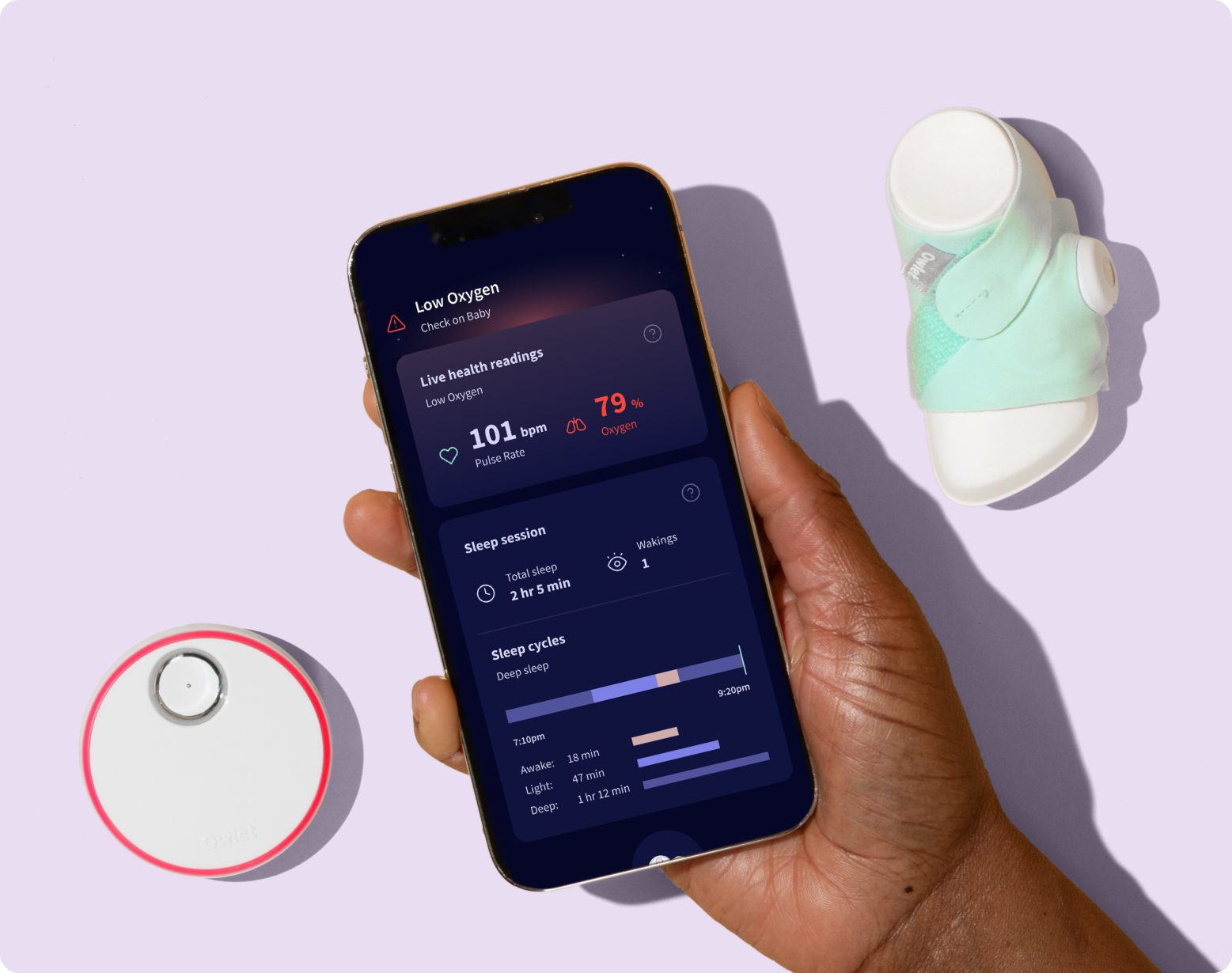
As a fast-growing baby monitor brand, Owlet needed to quickly onboard new retail partners while maintaining accurate and timely data exchange. With Orderful, Owlet went live with its first connection in just two weeks. The company was able to accelerate its launch timeline and improve reliability across its entire fulfillment network, all while seeing a cost savings of 65%.
Society6
Artist-driven home decor brand Society6 was expanding its marketplace presence and needed a more scalable solution for managing EDI connections. Orderful replaced the company’s legacy system with a streamlined, cloud-first approach. The brand was able to cut onboarding time by 75% and greatly reduce the need for IT intervention.

Liquid Death
Rapidly growing canned water brand Liquid Death had ambitious retail expansion plans and couldn’t afford delays. Using Orderful, they were able to perform their EDI setup and connect with multiple trading partners with go-live times that were 400% faster, without managing custom configurations or engaging a third-party provider.

Shipwell
The logistics intelligence platform Shipwell needed to streamline document exchange and scale its onboarding capabilities to support high-volume growth. With Orderful, Shipwell was able to fully automate EDI message flows and reduce reliance on manual tracking or one-off setups. Orderful’s EDI tools and support for modern communication protocols enabled faster, more reliable communication across its network.

These customer wins reflect a broader shift across industries: businesses are leaving behind fragmented architectures and embracing centralized EDI systems that scale. Whether you're in retail, logistics, or manufacturing, modern EDI platforms provide a foundation for long-term agility, cost savings, and improved data accuracy.
Instead of navigating a tangle of siloed tools and inconsistent onboarding processes, companies are turning to platforms like Orderful to streamline their EDI operations. Modern EDI tools improve message monitoring and ensure every document conforms to evolving industry standards. The result is more consistent outcomes and a smoother experience for every document issuer, recipient, and partner along the chain.
Ready to Reduce Your Onboarding Time?
Sluggish onboarding isn't just a technical inconvenience. It’s a business liability. Modern EDI platforms have redefined what’s possible, turning month-long setups into rapid, repeatable processes that support real-time commerce.
With Orderful, you get more than just speed. You gain the ability to exchange electronic documents using modern message protocols, connect to partners through a web EDI framework, and meet evolving EDI standards without having to rely on fragmented solutions or a patchwork of providers.
Whether you're managing a handful of connections or scaling across a vast network, Orderful acts as a fully managed provider built to support growth, accuracy, and automated transmission at scale.
Speak to an EDI expert today and discover how fast, reliable onboarding can become your competitive edge.
EDI Onboarding Questions
Frequently Asked Questions
How long does it take to onboard an EDI trading partner? Traditional onboarding takes 8 to 12 weeks per trading partner, driven by manual mapping and shared testing windows. Orderful customers average 9 days per partner by starting from pre-built guidelines and running self-service testing instead of waiting on a shared schedule.
What is a 997 functional acknowledgment and why does it matter for compliance? A 997 confirms an EDI interchange was received and passed syntax validation, not that its business content was accepted. Retail EDI programs typically require a 997 within 2 to 4 hours of receipt, and missing that window is a common cause of compliance flags and chargebacks.
What's the difference between AS2, SFTP, and OFTP2? AS2 is the standard most large retailers require and includes a built-in MDN receipt. SFTP is a general-purpose encrypted file transfer without a native acknowledgment step. OFTP2 is common with automotive and European manufacturing partners and includes a built-in EERP receipt.
Does Orderful validate EDI transactions against X12 and EDIFACT standards? Orderful validates every transaction against the specific trading partner's published guideline set, covering ASC X12 transaction sets like the 850, 810, and 856. If you're trading internationally, your EDIFACT documents follow the same validate-before-transmit principle against the applicable guideline.
What should an EDI audit trail include? An audit trail should log the transaction ID, timestamp, sender and receiver identifiers, validation results, every linked 997 or 999 acknowledgment, and a record of any manual corrections. This is what compliance reviews and chargeback disputes require, and Orderful keeps this history in one searchable log per transaction.
How much does slow or noncompliant EDI onboarding actually cost? A single trading partner delayed 10 weeks at $50,000 in monthly order volume represents roughly $125,000 in delayed revenue. Missed 997 windows and audit gaps add compliance penalties and chargebacks on top of that delay.
Onboard Trading Partners Faster, Stay Audit-Ready
A fast onboarding process and a compliant one aren't different projects. Orderful runs both through the same pipeline: pre-built partner guidelines, automated X12 validation, tracked 997s, and a full audit trail, delivered at flat-rate pricing in an average of 9 days per trading partner. If your current onboarding queue is stuck on mapping or you can't produce an audit trail on demand, talk to an EDI expert about what a compliant 9-day process looks like for your trading partner list.
- 01Why Does Traditional EDI Onboarding Take So Long?
- 02How Do You Onboard Trading Partners Faster Without Losing Control?
- 03How Do You Ensure Compliance When Exchanging EDI Documents With Trading Partners?
- 04What Does Fast, Compliant Onboarding Look Like in Practice?
- 05Ready to Reduce Your Onboarding Time?
- 06EDI Onboarding Questions
- 07Frequently Asked Questions
- 08Onboard Trading Partners Faster, Stay Audit-Ready
