

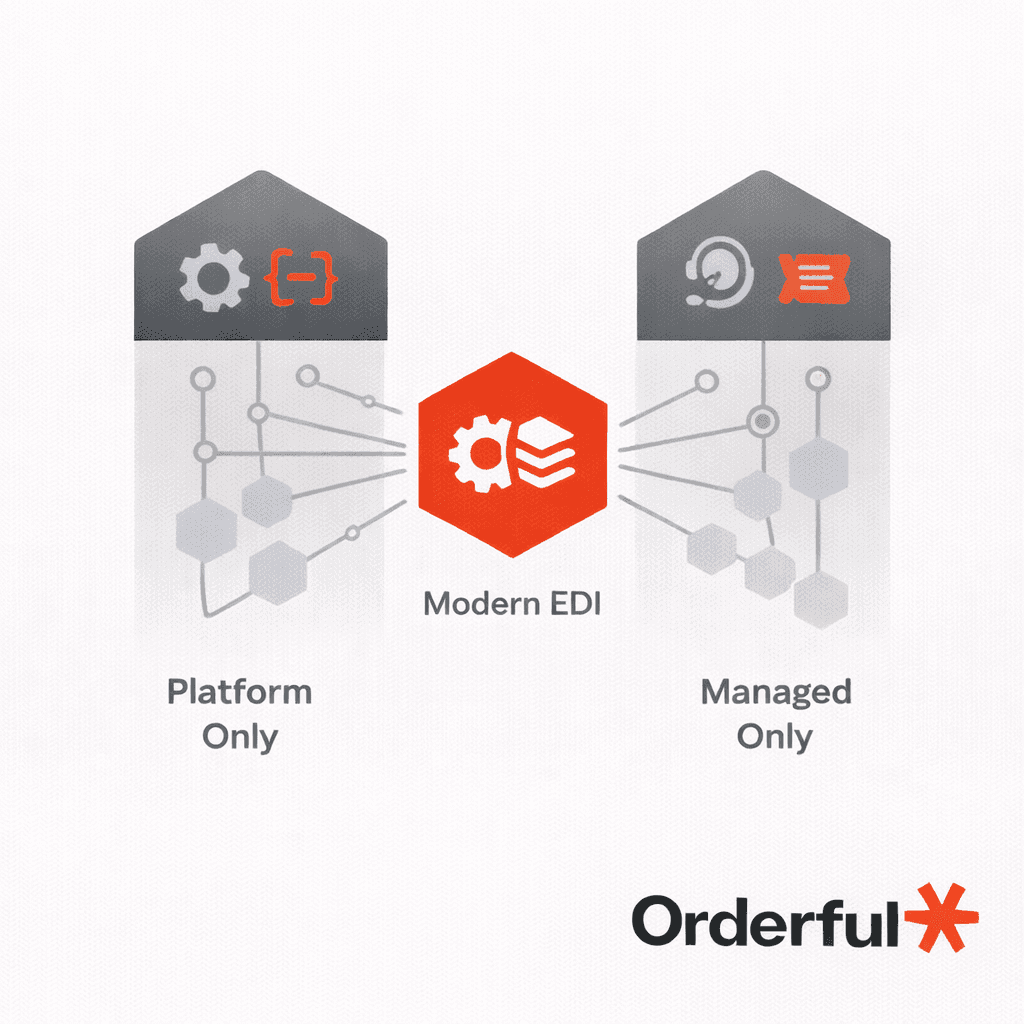
Modern EDI platforms no longer force a tradeoff between control and knowledgeable support. See how platform power and managed expertise work together.
Choosing an EDI approach can feel less straightforward than it should. Some providers emphasize modern platforms that give teams direct control over integrations and workflows. Others offer fully managed services that take most of the operational burden off your hands. Each model solves a real problem, but each introduces its own tradeoffs.
The hardest part is selecting the right electronic data interchange (EDI) service model to support data exchange between business partners. Platform-only tools let teams move faster and make changes on their own, but they can leave internal resources stretched thin as transaction volumes grow. Traditional managed services reduce hands-on effort, so teams can focus on core business priorities. However, that support often comes with slower turnaround times and limited visibility into day-to-day EDI activity.
This article explores the differences between a modern EDI platform and a managed service provider and what to look for when you don’t want to choose between control and expert support.
About Orderful
Orderful eliminates the platform versus managed service tradeoff through an API-driven foundation providing self-service control with managed expertise when needed. The Mosaic platform enables teams to configure integrations, manage trading partner connections, and monitor activity in real time, while EDI specialists provide guidance for partner onboarding, issue resolution, and optimization without rigid workflows or ticket queues. This flexible approach scales with changing business needs, letting teams leverage platform capabilities during steady periods and access managed support during volume spikes or rapid growth.
The Evolution Beyond The Platform Vs Managed Service Debate
EDI solutions have long been framed as a choice between two distinct service models. Companies either invested in platform-based EDI software and managed integrations internally or outsourced EDI operations to a managed service provider. This made sense when EDI expertise was scarce, and systems were harder to maintain.
Today, the debate still exists largely because many EDI service providers haven’t evolved their offerings. Most managed services continue to rely on ticket-based workflows and manual intervention, while some platform providers assume customers can handle every configuration and exception on their own. Both extremes may reach their limits as transaction volumes increase and trading partner requirements change.
Modern businesses aren't static, and their EDI systems shouldn’t be either. The biggest question is whether an EDI solution can adapt to changing business needs, internal resources, and partner relationships over time.
The Traditional Managed Service Provider Model
Managed service providers became the default EDI option for many companies because they removed complexity from internal teams. Instead of building in-house expertise or maintaining EDI infrastructure, organizations could hand off integrations, monitoring, and issue resolution to an external provider. For businesses with limited technical resources, that trade-off often felt worthwhile.
Why Managed EDI Took Hold
In the early days of EDI, integrations were coupled to legacy systems and communication protocols like value-added networks (VANs). Each trading partner came with unique requirements, and even small changes could introduce errors. Managed services handled mapping, compliance, and message delivery, allowing internal teams to focus on broader operational goals.
Where Fully Managed EDI Starts To Break Down
Over time, the model that once reduced hands-on effort now introduces new friction. Changes typically involve tickets, queues, and approvals, which slow response times to requirements changes. Visibility into EDI operations can also be limited, making it harder to track transaction volume, failures, or root causes right away. As businesses scale, these constraints can create an operational bottleneck in the EDI space.
The Traditional Platform-Only EDI Model
Platform-based EDI solutions appeal to organizations seeking greater control over their integrations and data exchange. Instead of relying on external teams, companies manage their own EDI software, trading partner connections, and updates. For teams with the technical capacity, this approach can feel faster and more transparent.
The Promise Of Self-Service EDI
Self-service EDI platforms are designed to put control directly in the company's hands. Internal teams can manage data mapping, integrate EDI with ERP systems or other enterprise applications, and respond to trading partner requests without waiting in a support queue. This model often supports quicker iteration and clearer visibility into EDI processes, especially when paired with modern, cloud-based services.
Where Platform-Only Solutions Fall Short
The challenges surface when EDI responsibilities compete with other priorities. As transaction volume grows or new trading partners come on board, teams may struggle to keep up with testing, monitoring, and exception handling. Without access to EDI experts, even small configuration errors can cause message failures or delays. Over time, self-service can shift from empowerment to pressure, particularly for organizations without dedicated EDI resources.
Why Brands Shouldn’t Have To Choose Between Control And Expertise
As EDI requirements become more dynamic, the limitations of choosing a single service model become harder to ignore. Platform-only approaches offer control and speed, but they assume internal teams can absorb ongoing EDI responsibilities. Fully managed EDI services reduce hands-on work, but they often introduce delays and limit visibility.
For many organizations, the real challenge is finding a solution that adapts to changing needs. Transaction volume can spike, new trading partners can come online unexpectedly, or internal resources can shift. An EDI system should be able to scale with those realities without forcing a system overhaul.
Modern EDI solutions close this gap by blending self-service capabilities with access to reliable support. That flexibility allows teams to maintain control when appropriate and rely on experienced guidance as complexity increases, without locking themselves into an all-or-nothing approach.
What Modern EDI Should Deliver
Modern EDI is no longer just about exchanging documents. As trading partner networks grow and requirements change more frequently, EDI needs to support speed, accuracy, and adaptability without overextending internal teams. That means moving beyond rigid service models and toward solutions designed for how businesses actually operate today.
A modern EDI solution should deliver a combination of platform capabilities and knowledgeable support that work together, not in isolation.
Flexible platform capabilities: Teams should be able to configure integrations, manage trading partner connections, and update workflows without waiting on long support queues. A modern system gives you control where it matters most.
Visibility and continuous monitoring: Real-time insight into transaction volume, message status, and failures helps spot issues early and respond before they impact trading partner relationships.
Scalable trading partner onboarding: Onboarding new partners shouldn’t feel like a custom project every time. Modern EDI supports standardized onboarding that scales with partner count.
Automation with human oversight: Automated workflows reduce manual processes, but access to EDI specialists is still critical when exceptions, edge cases, or compliance questions arise.
Together, these capabilities allow EDI to support day-to-day operations while remaining flexible enough to evolve alongside business growth.
How Orderful Combines Platform Power With Managed Expertise
Orderful was built to move beyond the limitations of traditional EDI service models. Instead of forcing companies to choose between a self-service platform or fully managed support, Orderful brings both together in a single, flexible solution. That approach gives teams the control they want without leaving them on their own when complexity increases.
A Modern, API-First Platform Foundation
At its core, Orderful is an API-driven EDI solution that's designed for speed, visibility, and reliability. Orderful’s Mosaic platform enables teams to configure integrations, manage trading partner connections, and monitor EDI activity in real time. Built-in automation and testing help reduce manual processes and catch issues early, so updates don’t turn into disruptive fire drills. This foundation makes it easier to scale EDI operations without adding unnecessary overhead.
Managed EDI Solutions That Support You Without Slowing You Down
Orderful’s managed services layer adds experienced guidance where it matters most. Teams can lean on EDI specialists for partner onboarding, issue resolution, and optimization without being locked into rigid workflows or long ticket queues. Support is designed to complement the platform, not replace it, so businesses stay informed and in control.
Flexible Support That Scales With Your Business
As needs change, Orderful adapts. Companies can rely more heavily on self-service capabilities during steady periods and bring in additional managed support when transaction volume spikes or new partners come online. Organizations can avoid overpaying for unused services while still accessing help when needed, thanks to this flexibility.
Choosing The Right EDI Service Model For Long-Term Growth
Choosing an EDI provider is about selecting a service model that can support growth without creating new constraints down the line. As volumes increase and trading partner networks expand, flexibility becomes just as important as functionality.
The right EDI solution should align with current operations while leaving room to adapt. Some teams need control and visibility. Others benefit from expert support during system changes or periods of rapid growth. Many need a balance of both. Evaluating EDI solutions through that lens makes it easier to avoid lock-in and choose a path that supports long-term operational resilience.
The Right EDI Platform vs. Managed Service Approach
The difference between an EDI platform and a managed service provider no longer has to be an either-or decision. Modern EDI solutions combine flexible platform capabilities with knowledgeable support, so teams can stay in control without taking on unnecessary risk or overhead.
Orderful brings that balance together to scale with your business and your trading partner network. If you’re evaluating your EDI approach or planning for growth, contact an EDI expert or book a demo to learn how a modern platform with managed support can work for you.
Frequently Asked Questions
What is the difference between an EDI platform and a managed service provider?
EDI platforms give teams direct control over integrations, workflows, and trading partner connections, requiring internal resources to manage configurations, monitoring, and issue resolution. Managed service providers handle EDI operations externally including mapping, compliance, and message delivery, reducing hands-on effort but introducing ticket-based workflows and limited visibility. Platform models offer speed and transparency but assume teams can absorb ongoing EDI responsibilities. Managed services reduce operational burden but often slow response times to requirement changes as transaction volumes grow.
Why did traditional managed EDI services become the default option?
Traditional managed EDI services became the default because early EDI integrations were coupled to legacy systems and complex communication protocols like VANs. Each trading partner brought unique requirements where small changes could introduce errors. Managed services handled mapping, compliance, and message delivery, removing complexity from internal teams with limited technical resources. This allowed organizations to exchange EDI documents without building in-house expertise or maintaining EDI infrastructure, making the tradeoff worthwhile for businesses lacking dedicated EDI capacity.
Where do platform-only EDI solutions fall short?
Platform-only solutions fall short when EDI responsibilities compete with other priorities as transaction volume grows or new trading partners come on board. Teams struggle to keep up with testing, monitoring, and exception handling without dedicated EDI resources. Small configuration errors can cause message failures or delays without access to EDI experts. Self-service shifts from empowerment to pressure, particularly for organizations where internal teams must balance EDI with broader operational goals. The model assumes continuous technical capacity that may not exist during growth periods.
Why shouldn't brands have to choose between control and expertise?
Brands shouldn't choose because EDI requirements are dynamic and single service models create limitations. Platform-only approaches assume internal teams can absorb ongoing responsibilities despite changing transaction volumes and resource availability. Fully managed services reduce hands-on work but introduce delays and limit visibility into day-to-day operations. Transaction volume spikes, unexpected partner onboarding, and shifting internal resources require EDI systems that adapt without forcing complete overhauls. Modern solutions blend self-service capabilities with reliable support, allowing teams to maintain control when appropriate and access guidance as complexity increases.
What should modern EDI deliver?
Modern EDI should deliver flexible platform capabilities where teams configure integrations, manage trading partner connections, and update workflows without long support queues. Visibility and continuous monitoring provide real-time insight into transaction volume, message status, and failures to spot issues early. Scalable trading partner onboarding uses standardized processes that scale with partner count rather than treating each addition as a custom project. Automation with human oversight reduces manual processes while maintaining access to EDI specialists for exceptions, edge cases, and compliance questions.
How does Orderful combine platform power with managed expertise?
Orderful's API-driven Mosaic platform provides self-service control for configuring integrations, managing trading partner connections, and monitoring EDI activity in real time. Built-in automation and testing reduce manual processes and catch issues early. Managed services add experienced guidance for partner onboarding, issue resolution, and optimization without rigid workflows or ticket queues. Support complements the platform rather than replacing it, keeping businesses informed and in control. This flexible approach scales with changing needs, allowing heavier reliance on self-service during steady periods and additional managed support during volume spikes or rapid growth.
How do I choose the right EDI service model for long-term growth?
Choose EDI service models that align with current operations while leaving room to adapt as volumes increase and trading partner networks expand. Evaluate whether solutions provide control and visibility when teams need autonomy, expert support during system changes or rapid growth periods, and flexibility to balance both approaches without lock-in. The right solution should support growth without creating new constraints, adapting to changing transaction volumes, unexpected partner onboarding, and shifting internal resources. Avoid rigid either-or decisions between platform and managed services by selecting providers offering integrated approaches that scale with business needs.
- 01About Orderful
- 02The Evolution Beyond The Platform Vs Managed Service Debate
- 03The Traditional Managed Service Provider Model
- 04The Traditional Platform-Only EDI Model
- 05Why Brands Shouldn’t Have To Choose Between Control And Expertise
- 06What Modern EDI Should Deliver
- 07How Orderful Combines Platform Power With Managed Expertise
- 08Choosing The Right EDI Service Model For Long-Term Growth
- 09The Right EDI Platform vs. Managed Service Approach
- 10Frequently Asked Questions
