

Compare EDI providers for health and beauty brands. Learn which features matter and how modern EDI platforms support faster, compliant retail growth.
Health and beauty brands operate in a complex retail environment. Product catalogs change constantly, SKU counts grow quickly, and retailers enforce strict rules around every aspect of information exchange. As brands expand into Sephora, Ulta, Amazon, and other major channels, the pressure on backend operations increases just as fast.
For many companies, that pressure first shows up in electronic data interchange (EDI), the systems that exchange critical business documents such as purchase orders and invoices. When workflows aren’t built for the pace and variability of beauty retail, teams end up relying on manual fixes that slow launches and introduce errors. If you need a refresher, this overview explaining what EDI is will help ground the conversation.
This article explores what makes EDI for health and beauty unique, the capabilities brands should look for, and how modern platforms support faster, more reliable retail operations.
About Orderful
Orderful supports health and beauty brands through prebuilt connections to major retailers like Sephora, Ulta, and Target with nine-day average implementation timelines that meet tight launch schedules. The API-first platform integrates cleanly with ecommerce platforms, ERPs, and logistics providers while centralized item data management keeps complex SKU attributes consistent across trading partners. Real-time inventory visibility prevents overselling across channels, automated compliance reduces manual corrections for retailer requirements, and transparent pricing scales predictably without surprise fees.
Why Health and Beauty Brands Have Unique EDI Requirements
Health and beauty brands face operational demands that don’t always show up in other retail categories. Product assortments are larger, more variable, and frequently updated. A single item may come in multiple shades, sizes, or formulations, each requiring precise item data to move cleanly through retailer systems. Small discrepancies can create downstream issues.
Retail expectations also tend to be stricter. Beauty retailers enforce detailed requirements around product data, labeling, and documentation, and they expect fast turnaround when those requirements change. At the same time, brands often sell across a mix of direct-to-customer (DTC) storefronts, beauty chains, and large retailers, all with different rules and timelines.
Generic EDI setups weren’t built for this level of variation. Without workflows designed for beauty-specific complexity, companies end up compensating with manual processes that can slow launches and introduce errors.
Common Challenges in Health and Beauty Supply Chains
Health and beauty supply chains move fast and leave little room for error. As brands scale across more retailers and sales channels, small operational gaps can quickly turn into delays, rejected EDI documents, or strained partner relationships. These challenges tend to show up in a few consistent ways.
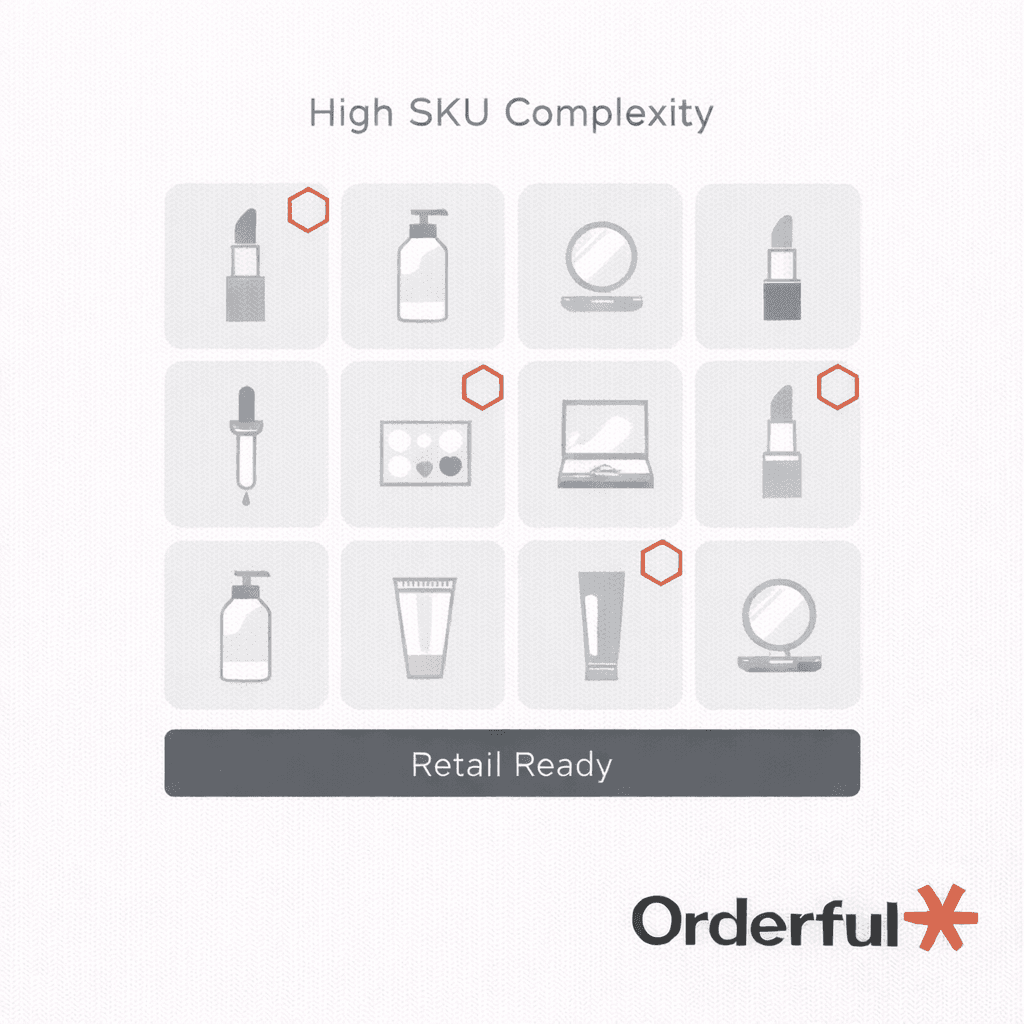
High SKU complexity: Products often differ by shade, size, formulation, or packaging, which increases the volume and precision of item SKU data that must stay aligned across systems.
Strict retailer compliance requirements: Beauty retailers enforce detailed rules around product data, packaging, and documentation. Even minor inconsistencies can trigger chargebacks or rejected transactions.
Multi-channel distribution: Selling into multiple channels often means simultaneously managing different document types, validation rules, and fulfillment expectations, which increases coordination effort and the risk of misaligned data.
Seasonal launches and promotional cycles: New product drops and limited-time promotions compress onboarding timelines, leaving little margin for manual corrections or slow integrations.
Without purpose-built workflows, these pressures compound, forcing teams to spend more time fixing issues than supporting growth.
Key EDI Capabilities Health and Beauty Brands Need
To keep pace with fast-moving retailers and frequent product updates, health and beauty brands need more than basic document exchange. The right EDI capabilities should reduce friction across launches, inventory management, and trading partner compliance, without adding operational overhead as the business grows.
Fast Retailer Onboarding for Product Launches
New products and retail expansions often run on tight timelines. EDI platforms should support rapid onboarding so brands can meet retailer schedules without delaying launches or relying on temporary workarounds.
Item Data Management for Complex Product Attributes
Beauty products carry detailed attributes, such as shades, sizes, formulations, and packaging variations. EDI applications must handle this complexity cleanly, ensuring item data remains consistent across internal systems and downstream partners.
Real-Time Inventory Accuracy Across Channels
Inventory levels change quickly when brands sell across multiple channels. EDI workflows should support timely inventory updates to keep availability accurate, helping prevent overselling, stockouts, and fulfillment issues.
Compliance Automation for Beauty Retailers
Retailers enforce strict requirements around documents, labeling, and data formats. Automated compliance checks help catch issues early and reduce the manual effort required to meet changing retailer rules.
Scalability Without Rework
As order volumes, SKUs, and trading partners increase, EDI infrastructure should scale without forcing teams to rebuild various system integrations or rethink core workflows. Flexibility here supports long-term growth instead of creating future operational bottlenecks.
What to Evaluate When Selecting an EDI Provider For Health and Beauty
Not all EDI providers are equipped to handle the pace and complexity that health and beauty retailers demand. Before committing to a solution, evaluate how well a platform supports your current operations and whether it can adapt as your business grows.
Prebuilt retailer connections: Providers should offer established connections to major beauty and mass retailers, reducing setup time and minimizing custom work during onboarding.
Implementation speed: Long implementation timelines can delay launches and strain internal teams. Faster deployment helps brands respond quickly to new retail opportunities.
Industry-specific data support: Health and beauty products require detailed item attributes and strict formatting. EDI workflows should accommodate this complexity without relying on manual data entry or human intervention.
API capabilities: Modern tech stacks benefit from API-driven integration options that connect cleanly with ecommerce platforms, logistics partners, and ERP systems.
Cost structure and growth alignment: Pricing should scale predictably as volumes increase, without introducing unexpected fees or forcing costly rework as operations expand.
Evaluating these areas helps brands avoid short-term fixes that can limit flexibility later on.
Common Mistakes Beauty Brands Make When Choosing EDI Providers
When selecting an EDI provider, beauty brands often focus on solving immediate problems rather than on long-term operational fit. It's easy to prioritize low upfront costs over flexibility, which can lead to higher expenses when it's time to expand.
Another issue is underestimating onboarding timelines. Long implementations may seem manageable early on, but they can delay launches and make it harder to respond to new requirements. Some companies also treat EDI integration as a one-time setup, assuming workflows won’t need frequent updates. In reality, retailer EDI compliance rules and sales channels change regularly.
Choosing a provider that adapts to these shifts reduces manual workarounds that slow operations and limit growth.
Why API-First EDI Matters for Fast-Growing Beauty Brands
As health and beauty brands scale, traditional EDI models often struggle to keep up. Legacy approaches rely on rigid workflows and point-to-point connections that make even small changes time-consuming. For fast-growing brands, that rigidity can slow launches, complicate integrations, and increase reliance on manual processes.
API-first EDI solutions take a different approach. By treating EDI as part of a broader integration layer, these platforms allow data to move more flexibly between ecommerce systems, warehouses, integrated enterprise applications, and trading partners. This makes it easier to adapt when product assortments expand, retailers change requirements, or new channels come online.
Orderful’s AI-native platform, Mosaic, is built around this model. Instead of forcing teams to work around EDI limitations, API-first architecture supports faster updates, cleaner integrations, and greater control as beauty brands grow and evolve.
How Orderful Supports Health and Beauty Companies
Orderful is built to support the speed, complexity, and compliance demands that health and beauty brands face as they grow. Instead of forcing teams to adapt to rigid EDI workflows, Orderful provides a modern platform that fits how beauty businesses actually operate.
Prebuilt connections to major health and beauty retailers: Brands can connect quickly to retailers like Sephora, Ulta, Target, and other mass channels without lengthy development.
Fast implementation timelines: With an average implementation time of nine days, teams can meet retailer onboarding schedules and launch products without unnecessary delays.
API-first integration: Orderful integrates cleanly with ecommerce platforms, ERPs, and logistics providers, supporting flexible workflows across DTC and wholesale operations.
Centralized item data management: Complex SKU attributes, such as shades and sizes, stay consistent across trading partners and internal systems.
Real-time inventory visibility: Continuous data exchange keeps inventory up to date across channels, helping prevent overselling and fulfillment errors.
Automated compliance: Built-in validation reduces manual corrections and helps brands stay aligned with retailer-specific requirements and maintain regulatory compliance.
Transparent pricing: Predictable pricing supports growth without surprise fees and scales as trading partner connections increase.
What Modern Health and Beauty EDI Looks Like in Practice
Modern EDI for health and beauty brands prioritizes speed, visibility, and adaptability across vendor and distributor relationships. Instead of managing each trading partner separately, shared workflows keep item data, documents, and validations aligned as requirements change.
This approach is reflected in how companies like Ritual modernized their EDI operations. As the brand expanded into new retail channels, it needed a way to onboard partners quickly while maintaining consistent data and compliance standards. By moving away from rigid, manual processes, Ritual gained better control over retailer integrations and reduced the operational drag that often accompanies growth.
EDI for Health and Beauty Brands That Need Speed and Control
Speed and accuracy are critical for health and beauty brands. As product assortments expand and retail relationships multiply, EDI plays a central role in keeping operations responsive. Platforms built for modern integration make it easier to adapt to changing retailer requirements without slowing teams down.
Orderful supports faster onboarding, cleaner data exchange, and long-term scalability. If you’re evaluating EDI providers, it may be time to rethink how EDI fits into your operations. To see how Orderful can support your business, contact an EDI expert today or book a demo to explore the platform in more detail.
Health and Beauty EDI FAQs
Why do health and beauty brands have unique EDI requirements?
Health and beauty brands face operational demands from larger, more variable product assortments requiring precise item data. A single item may come in multiple shades, sizes, or formulations, each needing exact details to move cleanly through retailer systems. Beauty retailers enforce stricter expectations around product data, labeling, and documentation with fast turnaround when requirements change. Brands often sell across DTC storefronts, beauty chains, and large retailers simultaneously, all with different rules and timelines. Generic EDI setups weren't built for this variation, forcing companies to compensate with manual processes.
What are common challenges in health and beauty supply chains?
Common challenges include high SKU complexity where products differ by shade, size, formulation, or packaging, increasing the volume and precision of item data needed across systems. Strict retailer compliance requirements enforce detailed rules around product data, packaging, and documentation where minor inconsistencies trigger chargebacks or rejected transactions. Multi-channel distribution means managing different document types, validation rules, and fulfillment expectations simultaneously. Seasonal launches and promotional cycles compress onboarding timelines, leaving little margin for manual corrections or slow integrations. Without purpose-built workflows, these pressures compound.
What EDI capabilities do health and beauty brands need?
Essential capabilities include fast retailer onboarding supporting rapid connections for tight product launch timelines, item data management handling complex attributes like shades and formulations consistently across systems, real-time inventory accuracy across channels preventing overselling and stockouts, compliance automation catching issues early and reducing manual effort for changing retailer rules, and scalability without rework where infrastructure grows without forcing teams to rebuild integrations as order volumes, SKUs, and trading partners increase.
What should I evaluate when selecting an EDI provider for health and beauty?
Evaluate prebuilt retailer connections to major beauty and mass retailers reducing setup time, implementation speed avoiding long timelines that delay launches, industry-specific data support accommodating detailed item attributes without manual data entry, API capabilities connecting cleanly with ecommerce platforms and ERPs, and cost structure scaling predictably as volumes increase without unexpected fees or costly rework. These areas help brands avoid short-term fixes limiting future flexibility.
What mistakes do beauty brands make when choosing EDI providers?
Common mistakes include prioritizing low upfront costs over flexibility leading to higher expenses during expansion, underestimating onboarding timelines that delay launches and make responding to new requirements harder, and treating EDI as one-time setup when retailer compliance rules and sales channels change regularly. Brands often focus on solving immediate problems rather than evaluating long-term operational fit. Choosing providers that adapt to regular shifts reduces manual workarounds slowing operations and limiting growth.
Why does API-first EDI matter for beauty brands?
API-first EDI matters because traditional models rely on rigid workflows and point-to-point connections making small changes time-consuming, which slows launches and complicates integrations. API-first solutions treat EDI as part of broader integration layers, allowing data to move flexibly between ecommerce systems, warehouses, and trading partners. This makes adapting easier when product assortments expand, retailers change requirements, or new channels launch. The architecture supports faster updates, cleaner integrations, and greater control as beauty brands scale.
How does Orderful support health and beauty companies specifically?
Orderful provides prebuilt connections to major health and beauty retailers enabling quick onboarding without lengthy development. Nine-day average implementation timelines meet tight retailer schedules and product launch deadlines. API-first integration connects cleanly with ecommerce platforms, ERPs, and logistics providers across DTC and wholesale operations. Centralized item data management keeps complex SKU attributes like shades and sizes consistent across partners. Real-time inventory visibility prevents overselling through continuous data exchange. Automated compliance reduces manual corrections while transparent pricing scales predictably as connections increase.
- 01About Orderful
- 02Why Health and Beauty Brands Have Unique EDI Requirements
- 03Common Challenges in Health and Beauty Supply Chains
- 04Key EDI Capabilities Health and Beauty Brands Need
- 05What to Evaluate When Selecting an EDI Provider For Health and Beauty
- 06Common Mistakes Beauty Brands Make When Choosing EDI Providers
- 07Why API-First EDI Matters for Fast-Growing Beauty Brands
- 08How Orderful Supports Health and Beauty Companies
- 09What Modern Health and Beauty EDI Looks Like in Practice
- 10EDI for Health and Beauty Brands That Need Speed and Control
- 11Health and Beauty EDI FAQs
